
It usually starts with a wet sock. You step off the basement stairs, and the floor near the washer is damp. Maybe it is a thin puddle. Maybe it has crept all the way to the floor drain. The washer looks fine, and the cycle finished. The real question is where all that water came from.
Here is the good news. A leak almost always tells you where it starts. Where the water pools, and when it appears, points to a short list of parts. Some of those fixes take five minutes and cost nothing. Others need a technician before the next load.
In most homes, the answer to why is my washer leaking is simple. It is usually a worn hose, a torn door seal, a failing drain pump or too many suds. Less often, it is a worn tub seal deep inside the machine.
In this guide, you will find:
- A simple test to find exactly where the water comes from
- What each leak spot means: back, bottom, front door and top
- Which leaks you can fix yourself, and which ones need a pro
- Real repair price ranges, and when replacing makes more sense
Let’s start with the question most people skip.
What Is Really Happening When Your Washer Starts Leaking?
The short answer to why is my washer leaking is simple. Water has escaped the path it is supposed to follow. Usual causes are cracked fill hoses, a worn door gasket, a leaking drain pump and excess suds. The location of the puddle and the point in the cycle narrow it down fast.
When people ask why is my washer leaking, it helps to think of a washer as a closed loop. Water comes in through two hoses and an inlet valve. It sits in the tub during the wash. Then a pump pushes it out through the drain hose. A leak means one link in that loop failed.
That is why guessing gets expensive. Replacing a door gasket will not fix a cracked pump. Before you buy any part, find the link that broke.
How Can You Be Sure the Water Is Coming From the Washer at All?
Not always. In basement laundry rooms, a slow floor drain or an overflowing standpipe can leave water near the washer. Sweating cold water pipes can drip too. Rule these out first, because they look exactly like a washer leak.
Many Buffalo homes have the washer next to a floor drain. When that drain is slow, water from the washer’s own drain hose can bubble back up and spread. The washer gets blamed, but the drain line is the problem.
Before you ask why is my washer leaking, ask if it is the washer at all. Here is a quick way to tell. Check the floor drain and the standpipe right after a drain cycle. If water rises out of the pipe or the drain grate, call a plumber, not an appliance tech. If the pipes stay dry, keep reading.
How Do You Find Where a Washer Leak Is Coming From?
Dry the floor completely. Lay paper towels around the base of the washer, front, sides and back. Run a short cycle and watch which towel gets wet first, and when. Then check the water itself. Clear water points to the fill side. Soapy water points to the tub, pump or drain side.
This is the paper towel test, and it answers why is my washer leaking faster than any guess. It costs nothing and saves a lot of guessing.
Watch the timing as closely as the location:
| When the leak appears | Where you see it | Most likely cause |
|---|---|---|
| While filling, even when off | Back or bottom | Fill hoses, rubber hose washers, inlet valve |
| During the wash | Front (front load) | Door boot gasket, detergent drawer |
| During the wash | Top or sides (top load) | Overfilling, too many suds, unlevel machine |
| While draining | Back or floor drain area | Drain hose, standpipe, clogged floor drain |
| While draining or spinning | Under the center | Drain pump, pump seal, pump filter cap |
| During spin, with noise | Under the tub | Worn tub seal and bearings |
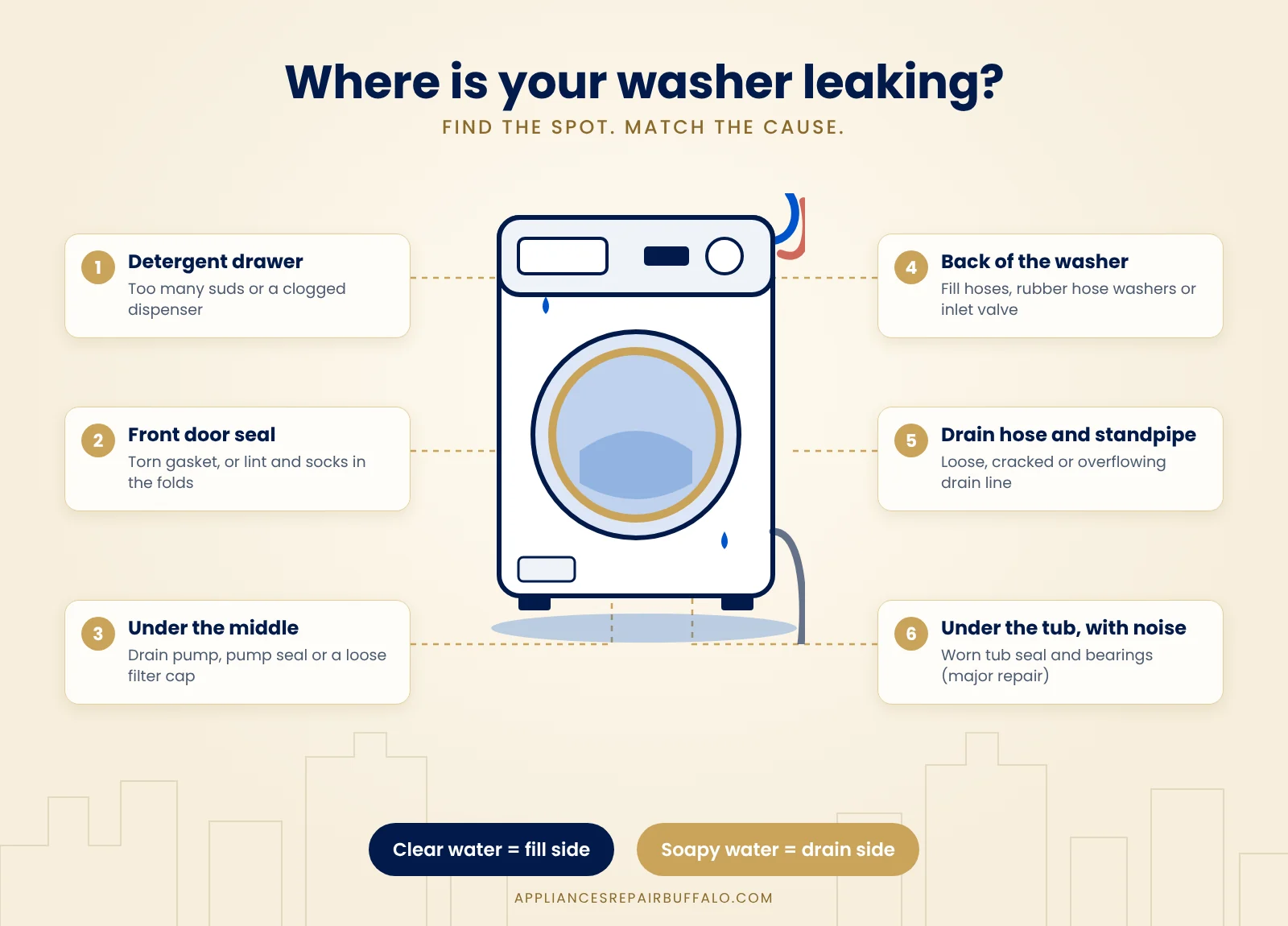
A flashlight helps here. Look under the machine while it fills and while it drains. Keep your hands out of the cabinet while it is plugged in.
Leak spot found
Let us fix it before the next load
A $79 service call, credited to the repair. One clear price before any work starts.
What Causes Water to Leak From the Back of a Washer?
Leaks at the back usually come from the fill hoses. The rubber washers inside the hose ends dry out, crack or go missing. Hoses also loosen from vibration. Water dripping with the washer off points to the inlet valve or the house shutoff valve.
If you are asking why is my washer leaking from the back, start with the easy check. Turn off both water valves. Unscrew each hose and look inside the end. You should see a flat rubber washer seated in the fitting. If it is cracked, flattened or gone, that is your leak. A new one costs less than a coffee.
Two common mistakes make this worse. First, plumber’s tape on a hose fitting. These fittings seal with the rubber washer, not the threads. Tape can stop the hose from seating fully. Second, overtightening with pliers, which cracks the plastic coupling.
If the house valve handle itself is dripping, the small packing nut behind it may need a gentle snug. If the inlet valve on the washer is cracked or will not close, it needs replacing. You may notice water slowly filling the tub while the washer is off. That is a classic inlet valve sign.
What Causes a Puddle Under the Middle of the Washer?
A puddle under the middle of the washer during draining usually points to the drain pump or its seal. Other causes include a loose pump filter cap, a split internal hose or a worn tub seal. Soapy water under the machine almost always means a drain-side problem.
If you are asking why is my washer leaking only during the drain, the pump is the first suspect. It sits low in the cabinet. Its seal wears over time, and the housing can crack if a coin or hairpin jams the impeller. On many front loaders, the pump has a small filter behind an access panel. If that cap was not screwed back tightly after cleaning, it will drip every drain.
Inside the cabinet, rubber hoses connect the tub, pump and dispenser. A clamp can loosen, or a hose can split from age. These leaks often appear only during certain parts of the cycle.
A worn tub seal is the serious one. Water seeps past the seal at the center shaft and drips straight down. It usually arrives with a rumble or grinding noise during spin. We cover that below.
Why Does a Front Load Washer Leak Around the Door During a Wash?
Front load door leaks usually come from the door boot gasket. That is the thick rubber ring around the opening. Lint, hair or a sock caught in the gasket breaks the seal. Tears, punctures and mold-weakened rubber also leak. Clean the gasket first, then check it closely for damage.
Open the door and pull back the folds of the gasket. You will often find coins, hair ties or a small sock. Wipe the inside folds with a towel and check the bottom section, where water sits.
Look for small slits or holes. Underwire from bras is a common culprit. It slips between the drum and gasket and cuts the rubber during spin. A torn gasket cannot be patched reliably. It needs replacing.
Water dripping from the upper left corner is often the detergent drawer instead. A clogged dispenser or too much soap makes it overflow. Pull the drawer out and rinse the channels.
Why Does a Washer Leak Only When It Drains or Spins?
If water appears only while the washer drains, check the drain hose and the standpipe first. The hose can pop out, crack or push too far into the pipe. A clogged standpipe or floor drain overflows. If those are fine, the drain pump or its seal is next.
The drain hose usually hooks into a standpipe or drops into a laundry sink. Vibration can shake it loose. Make sure it is secured with a clip or strap, and check it for splits along its length.
The hose should not be shoved deep into the standpipe. A tight fit can siphon water and cause problems. Most manufacturers want a small air gap around it.
If the drain path looks good, run a drain cycle with the front panel area lit. A dripping pump housing or a wet spot under the pump confirms it.
Can Using Too Much Detergent Really Make a Washer Leak?
Yes. Excess suds can push water out of the detergent drawer, the door seal and even vents at the back. This happens most with high-efficiency washers using regular detergent or too much HE detergent. The leak looks foamy, and it often stops once you cut back on soap.
Modern washers use far less water than older models. That means detergent goes a long way. Most loads need only a tablespoon or two of HE detergent. Pods count as a full dose, so never add extra soap with them.
Soft water makes suds worse. If you notice foam in the drum after the rinse, run an empty hot cycle with no soap. Then use less on the next load and see if the leak returns.
This is the cheapest leak to fix. Before calling anyone, try one week of measured detergent. Many people asking why is my washer leaking stop right here.
Water still on the floor
Get a same-day washer repair
Turn off the water valves, then call. We are open every day, 8 AM to 6 PM.
What Does Brown or Black Water Under My Washer Mean?
Dark or oily water under a top loader can mean the gearcase, also called the transmission, is leaking oil. On front loaders, rusty brown water often signals failing tub bearings with a worn seal. Both usually come with loud grinding or squealing during spin. These are major repairs.
Not every dark puddle is serious. Sometimes it is just dirt from the floor or residue from the drain. Wipe it with a white paper towel. Oil feels slick and does not soak in like water.
If it is oil or rusty water, and the washer is noisy during spin, stop using it. Running it longer can damage the drum and the motor. A technician can confirm the cause and give you a clear price. Then you can decide on repair or replacement.
Why Would a Brand New Washer Leak Right After Installation?
A brand-new washer that leaks usually has an installation issue. The hose washers may be missing or the hoses not fully tightened. The drain hose may be loose or set at the wrong height. An unlevel washer can also slosh water out. Check the connections before assuming a factory defect.
New hoses often come with the rubber washers already inside, but not always. Look in each fitting before connecting. Hand-tighten, then give a gentle quarter turn with pliers.
Use a level on top of the washer, front to back and side to side. Adjust the leveling legs and lock them in place. A rocking washer can shake hoses loose within a few loads.
If everything is tight and level and it still leaks, contact the manufacturer. A new machine may still be under its factory coverage.
Is It Safe to Keep Using a Washer That Leaks?
It is best not to. Even a small leak can damage flooring, grow mold and soak electrical parts inside the washer. Water near outlets is a shock risk. Turn off the water, unplug the washer and wipe up the puddle. Find the source before the next load.
A slow drip can rot a subfloor or ruin a finished basement over weeks. Plenty of older Buffalo homes have wood framing right under the laundry area. You may not see the damage until it is expensive.
If you have to run one more load, stay close and watch it. Put towels down and keep the area dry. Do not run it overnight or while you are out.
How Much Does It Cost to Fix a Leaking Washer?
Most leak repairs cost between $140 and $240 with us, parts and labor included. A drain pump runs $150 to $240. A water inlet valve runs $140 to $220. Simple hose and washer fixes cost far less. Door gaskets and tub seal work are quoted after diagnosis.
Here is how the common leak repairs compare:
| Leak cause | Can you DIY? | Typical cost with us |
|---|---|---|
| Hose rubber washer or loose hose | Yes, usually | Lowest-cost fix, often just a part |
| Too many suds | Yes | Free (use less detergent) |
| Drain hose loose or cracked | Often | Low, part plus a short visit |
| Water inlet valve | Sometimes | $140 to $220 |
| Drain pump or pump seal | Sometimes | $150 to $240 |
| Door boot gasket | Hard | Quoted after diagnosis |
| Tub seal and bearings | No | Quoted after diagnosis (major repair) |
Every visit starts with a $79 service call. It is credited to the repair if you go ahead. You always see the full price before any work starts.
Next step for a leaking washer
Talk to a local washer technician
Most leaks are fixed in one visit with parts from the truck.
When Does It Make More Sense to Replace a Leaking Washer Than Repair It?
Use the 50/50 rule. Repair it when the washer is under halfway through its life. The repair should also cost under half of a new one. Hoses, valves, pumps and gaskets almost always pass. A worn tub seal on an older washer often does not.
Most washers last around 10 to 13 years. A seven-year-old machine with a bad pump is a clear repair. A twelve-year-old front loader with failed bearings is a different story. That job takes hours and big parts.
You can run your numbers in the repair-or-replace calculator on our home page. If you are on the fence, we will tell you honestly which side you are on.
Which Simple Habits Prevent Most Washer Leaks?
Check the hoses once a year and replace rubber hoses every five years or so. Braided stainless hoses last longer. Clean the door gasket and the pump filter monthly on front loaders. Use measured HE detergent, keep the washer level and never overload the drum.
A few habits make a big difference:
- Check hose ends yearly. Look for bulges, cracks or rust at the fittings.
- Leave the door open. On front loaders, this dries the gasket and fights mold.
- Clean the pump filter. Most front loaders have one behind a small panel.
- Measure detergent. More soap does not mean cleaner clothes.
- Keep it level. A level washer shakes less and loosens fewer fittings.
- Mind cold basements. Buffalo winters are hard on unheated basements. Hoses can freeze and split, so keep the space above freezing.
A full washer maintenance checklist is coming soon.
Frequently Asked Questions
Why is my washing machine leaking from underneath?
Water under the middle usually comes from the drain pump, its seal or a loose pump filter cap. A split internal hose can also leak there. If the water is soapy and appears while draining, the drain side is almost certainly the cause.
Why would a washer leak only on some loads and not others?
Intermittent leaks often come from suds, an overloaded drum or a drain hose that slips during spin. A slow floor drain that overflows only on big loads can also look like a washer leak. Note which loads cause it.
Why does my washer leak when it is not running?
Water collecting while the washer is off points to the fill side. A worn hose washer, a cracked hose or a leaky inlet valve lets water seep in. Turn off both supply valves until it is fixed.
Can a washer leak from the detergent drawer?
Yes. A clogged dispenser, too much detergent or low water pressure can make the drawer overflow. Pull it out, rinse the channels and the cavity behind it, and use less soap. If it still leaks, a dispenser hose may be loose.
How do I stop my washer hoses from leaking?
Turn off the water, unscrew the hose and check the rubber washer inside the fitting. Replace it if it is cracked or missing. Hand-tighten, then add a gentle quarter turn. Skip plumber’s tape on these fittings.
How dangerous is a leaking washer for your home and floors?
It can be. Water near outlets and the washer’s wiring creates a shock risk. Leaks also cause mold and floor damage. Unplug the washer, shut off the water and dry the area before investigating.
What usually causes a top load washer to leak?
Top loaders often leak from the fill hoses, an overfilling problem, too many suds or a worn tub seal. Oily dark water under the machine can mean a leaking gearcase. An unlevel machine can also spill water over the tub.
How long does a washer leak repair take?
Most leak repairs take about an hour once the cause is found. Hose, valve and drain pump jobs usually finish in one visit. Door gaskets and tub seal work take longer and may need a part ordered.
Can a small washer leak turn into a flooded basement?
A slow leak rarely floods a room. A burst fill hose, though, can release a lot of water fast. That is why you should shut off the supply valves when you see a leak. A nearby floor drain helps, but do not rely on it.
Should I call a plumber or an appliance technician?
If water comes from the floor drain, standpipe or house pipes, call a plumber. If it comes from the washer itself, such as its hoses, pump, gasket or tub, call an appliance technician. The paper towel test helps you decide.
Getting Your Laundry Room Dry Again Without Guessing at Parts
That damp sock at the bottom of the stairs has a clear answer now. You know how to answer why is my washer leaking. Find where the water shows up and when. Then match it to the cause. Hoses, suds and loose drain lines are often a quick fix. Pumps, valves and gaskets need a part and a short visit. Tub seals call for a repair-or-replace talk.
If you would rather skip the guesswork, our team serves homes across Buffalo, from Black Rock to South Buffalo. We repair top load and front load washers from all major brands. That includes Samsung, LG, Whirlpool, Maytag, GE and Bosch. Learn more about our washer repair service, or book a repair. We often arrive the same day.
If the washer and dryer are both acting up, we can look at the dryer on the same visit.
Call (716) 377-4920, open every day from 8:00 AM to 6:00 PM. Tell us where your puddle showed up first, and we will bring the right parts.